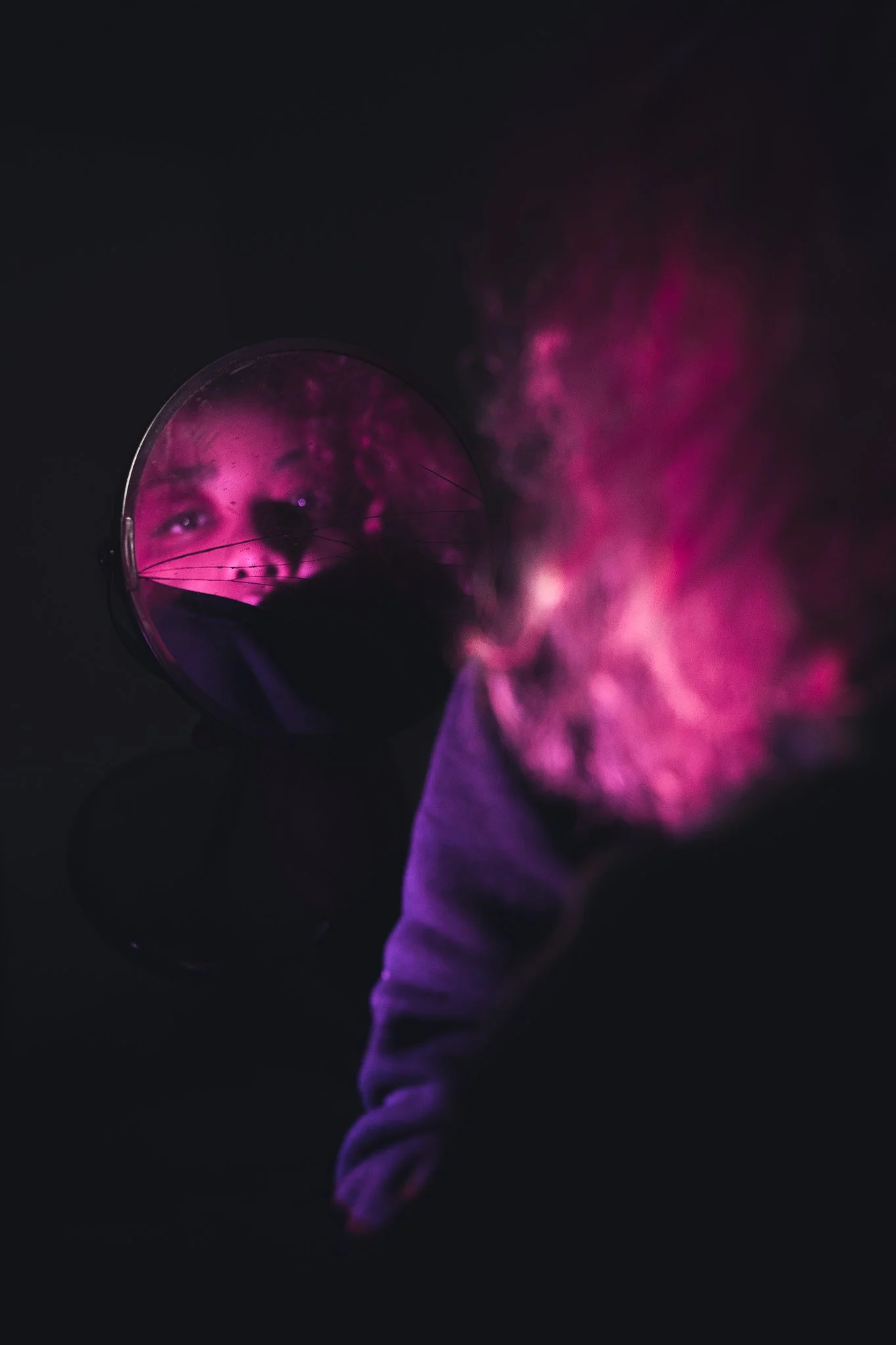
Imposter Syndrome, let’s talk about it.
You’re standing in the photo pit, surrounded by other photographers. And somehow, you still feel like you don’t belong here. You get hired by a band. You’re not sure why. And on the day of the event, you still don’t feel like you belong here. You go on your first tour. How did you get here? When will they realise they made a mistake? You don’t belong here.
The feeling
These thoughts, many of us had them, many still do. It’s a constant battle not to let them win. Not to give up. Ironically, I have the imposter syndrome about writing about the imposter syndrome. But how could I be an imposter when I’m sharing my own experience? It could be a first weapon in this constant battle.
Creatives and imposter syndrome go hands in hands. I have yet to meet one that never experienced it in their journey. This is why it is important to talk about it. We’re not alone in it.
As women, WOC and non binary-people in a scene where we’re still a minority, sometimes invisible, this syndrome hits even harder. We often feel alone, excluded, with no one to look up to when we look around us. We feel alienated. We not only fight an internal battle, but also one in our own environment. If we don’t see people looking like us on stage, backstage, in the crowd or in the photo pit, it makes it even harder to feel like we belong here. We stay conscious. We stay alert. Just like we kept on doing the silent math of being the only one.
The trap
We only ever see what someone chooses to share. And yet, knowing this, we still fall for it.
I’ll use myself as an example. A lot of people assumer I’m constantly working. Always travelling, always shooting. So many people assume concert photography is my full time job when I couldn’t even survive a month if I only had this job. And I get it, my feed looks busy. But a lot of what I post is just my life.Going to a show because I love the band. Travelling to see friends. Sometimes I get a photo pass, sure, but most of the time, I’m not working. I just like sharing. I’m aware of the image it can project, which is why I try to make a point of sharing the less sparkly parts too. The slow weeks, the doubts, the frustration, the things that didn’t go as planned.
And yet, fully knowing all of this, I still catch myself scrolling through someone else’s feed and thinking “they’re doing so much more than me”. They’re further along, more talented, more appreciated. I’m falling behind. Maybe I’ll never reach that.
I’m also someone else’s misleading social media. And they might be spiralling because of mine.
That’s the trap.
But here’s the flip side. The posts and stories I’ve gotten the most response, the most DMs, the most actual connection, are the ones where I showed something real. A moment of doubt. Something I was scared to share. Every time someone reached out to say they felt the same way. Not out of pity but in that sense of “oh, you too”. And that’s not nothing. That’s the syndrome losing the battle, even briefly. Social media gave us a trap. But it can also be a place where we can dismantle it if we choose to use it that way.
Showing up anyway
Let’s be clear about one thing. There is no fix to the imposter syndrome. No morning routine, no mindset shift, no amount of external validation that makes it permanently go away. What we’re talking about is learning to work alongside it. To keep moving even when it’s loud.
I’m going to share a few things that help me out, hoping they can help you too.
The first thing I come back to is facts. The syndrome is a story we tell ourselves. It’s one a reliable one. It will tell you that you don’t belong, that you got lucky, that it’s only a matter of time before someone figures it out and call you out. You can’t just tell yourself “believe in yourself” when these voices our so loud. So look at the actual evidence. You got the gig. You delivered. This client came back. The photo exists. These people use your photos as their profile picture. Any story line the syndrome is telling you, probably has a fact to counter it.
The second is other people. Not in a vague “find your community” way, but specifically: talk to photographers you admire. Ask them honestly how they’re doing. More often than not, you’ll find out they’re mid-spiral too. It breaks the illusion that everyone around you has it figured out and you’re the only one struggling to keep it together.
This is part of why spaces like Behind The Lens matter. We want to offer a space not only for opportunities and to share your work, but also as somewhere the conversation can actually happen.
The third one is communication. And it is more practical than it sounds. A big part of what the syndrome feeds on, is the pressure to know everything, to never show uncertainty, to always look confident. But knowing your limits and being clear about them isn’t a weakness. With clients, with fellow creatives, or even with yourself, being honest about what you can deliver and what is outside of your scope builds more trust than pretending. You can be confident in your work and still ask questions. These two things coexist.
Self-doubt, in the right dose, is productive. It’s what makes us look critically at our work, push further, get out of our comfort zone and try something different. It becomes a syndrome when it stops being self questioning and turns into a verdict. It’s when it makes you freeze, spiral, self-sabotage. When it makes you turn down opportunities because rejection feels safer when it comes from you first. I still do that, way more than I’d like to admit. I’m aware of it when it’s happening and I still do it.
But the goal is still the same. It’s to get to a place where the doubt doesn’t get the final word.
A couple of other fun things to do to battle the syndrome with facts:
Make a playlist with all the bands and artists you worked with, even if just once. The artists wanted you there. And the more time passes, the bigger the playlist gets. Always a mood booster for me. If you’re starting out and didn’t get your first official gig with an artist, you can do it with the artists you had the opportunity to photograph, for yourself, as press, by any means!
Screenshots messages, posts, comments from people you worked with when they have kind words for you. You have the written proof that these people were happy with your work. Same goes for fellow creatives or anyone with kind words. Having a bad day, it always cheers me up to go through these messages.
Here it is. I wrote this whole piece experience the very thing I’m writing about, and I published it anyway.
The feeling might still be there. Show up anyway.